Want more strategies like this?
Join our free newsletter to get weekly Band 9 frameworks delivered straight to your inbox.
You’ve probably heard it before — or worse, you’ve told it to yourself: “I’m an introvert, so I’ll never be confident enough to score well in the IELTS Speaking test.”
That belief is completely false. I am an introvert — an INTJ, according to the Myers-Briggs personality test — and I walked into the official IELTS exam room and scored a perfect Band 9 in Speaking, including a Band 9 across all four marking criteria. A viewer named Abdulazim once left a comment on one of my videos saying, “Judging by how you talk, I bet you don’t even come close to being an introvert.” I understand why he said that. But his comment reflects exactly the misconception I want to dismantle today.
Being introverted does not mean you speak poorly. In fact, once you understand what the IELTS examiner is actually grading — and once you build the right system — your introverted nature becomes one of your most powerful assets.
Redefining What It Actually Means to Be an Introvert
Most people conflate introversion with shyness or poor social skills. But Myers-Briggs defines introversion differently: it’s about where you direct your attention. Introverts tend to focus inward — on ideas, concepts, and reflections — rather than outward on people and social activities.
In practice, this means introverts recharge their energy by spending time alone or in small groups. For me personally, large crowds drain my battery in about 10 minutes. Constant small talk is exhausting. And yes, I naturally overthink my sentences before I let anything come out of my mouth.
But here is the critical reframe: the IELTS Speaking test is not small talk. It is a structured interview with a clear purpose. The examiner is not grading your charisma. They are listening for your Fluency, Lexical Resource (Vocabulary), Grammatical Range and Accuracy, and Pronunciation. Once you realize this, the social pressure disappears entirely.
Why Introverts Are Actually Built for This Test
You Excel Precisely Where It Counts Most: Part 3
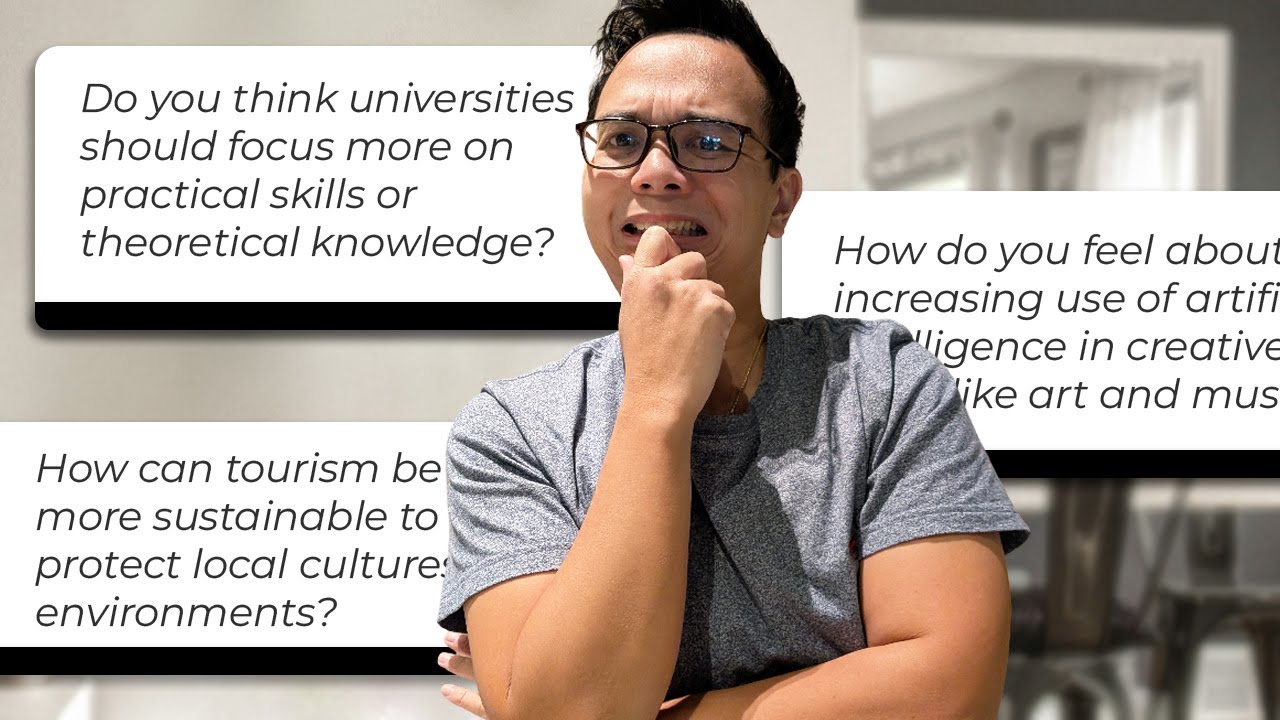
Part 3 of the IELTS Speaking test is a deep-dive discussion on abstract societal topics. This is where many extroverts struggle. They are used to casual conversation and small talk, so they tend to ramble without forming a coherent argument.
Introverts, by contrast, prefer depth over surface-level chatter. We think carefully about complex ideas. Part 3 is essentially the IELTS examiner inviting you to have a structured intellectual discussion — which is the one environment where many introverts genuinely come alive. You just need a way to organize those deep thoughts quickly and without hesitation.
You Are Naturally Analytical
Extroverts often rely on charm to carry them through. I knew I didn’t have much of that. So instead of winging it, I analyzed the IELTS Speaking marking criteria like it was a technical manual. I studied exactly what each criterion required, and then I built a system to make sure every single answer addressed all four.
That analytical approach is a core introvert strength. Use it.
The Frameworks That Replaced the Need for Spontaneous Chatter
An introvert’s worst enemy in the Speaking test is unstructured silence. Because we process deeply, we tend to pause for too long searching for the perfect word. The solution isn’t to become more spontaneous — it’s to build structure that eliminates the need for spontaneity altogether.
Here are the frameworks I created and used for each part of the test:
Part 1: The A.R.E. Framework™
For the short-answer questions in Part 1, I followed this simple three-step structure:
- A — Answer the question directly
- R — Give a Reason
- E — Provide an Example
This framework keeps your answer focused, complete, and free from awkward gaps. You never need to wonder what to say next.
Part 2: The Topic Diamond™
Part 2 requires you to speak for two full minutes from a cue card. For an introvert, two minutes of unstructured talking can feel impossible. The Topic Diamond™ gave me a mental map to follow:
- The Past
- The Present
- The Future
- My Opinion
By following this structure, I never lost my train of thought. I just moved from one point to the next, naturally extending my talk without panic.
Part 3: The I.D.E.A. Framework™
Part 3 demands that you construct logical arguments on abstract topics on the spot. The I.D.E.A. Framework™ let me do exactly that in a structured, confident way every time. Instead of freezing or rambling, I had a reliable mental process to fall back on.
These three frameworks didn’t just help me score well — they removed the social anxiety from the equation entirely. I wasn’t relying on personality. I was relying on a proven system.
How I Practiced: A Private, Pressure-Free Environment
Knowing a framework is only half the battle. You still have to practice speaking out loud, and for introverts, that is often the hardest part.
I’ll be honest with you: the idea of booking an expensive tutor or speaking to a different stranger every day sounded exhausting to me. Some speaking partners don’t show up on time. Others ghost you entirely. And having to reintroduce yourself to a new person every session before you can even get to practice adds a layer of social friction that can genuinely drain your motivation.
So I built the SpeakPrac app for myself. I needed a safe, private space where I could make mistakes without social pressure — somewhere I could practice at 11pm in my living room, fail spectacularly at a Part 3 answer, and just try again without any judgment. Using SpeakPrac, I drilled each of my frameworks hundreds of times. I tested them, refined them, and made them automatic.
This approach reinforced something I now believe deeply: competence builds confidence. You don’t need to feel confident before you start. You practice until the frameworks feel so natural that confidence follows automatically.
The Mindset Shift That Changes Everything
If you are an introvert, stop trying to become an extrovert before your test. You don’t need to.
Here is what is actually true:
- Being introverted does not mean you are shy. It means you recharge alone — nothing more.
- Being introverted does not mean you can’t speak English well. It means you prefer depth over small talk — which is exactly what Part 3 rewards.
- You don’t need to change your personality. You need to leverage the analytical mind you already have and pair it with a proven system.
The IELTS examiner doesn’t want to be dazzled. They want to hear clear communication, precise vocabulary, and structured, thoughtful answers. Those are things introverts are already naturally capable of producing.
Work with what you’ve got. Build the right system. And trust that the score will follow.
Ready to take your speaking to the next level?
Apply today's tips in the SpeakPrac app and get instant AI feedback on all 4 IELTS criteria. Or master the fundamentals with my complete, free video course.